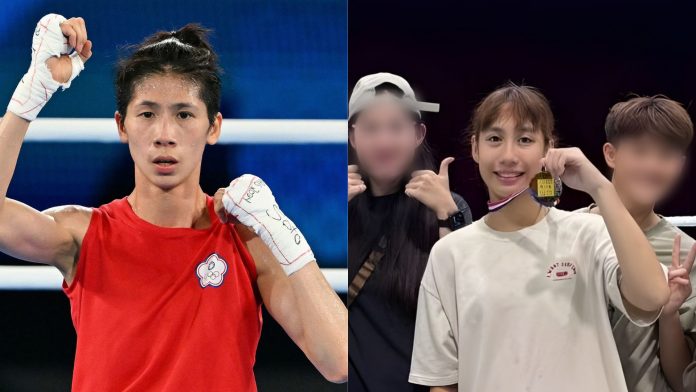
The Taiwanese boxer who was at the center of a sex row at the Olympics is on track to win gold at Taiwan’s National Games in the women’s boxing category. Lin Yu-Ting has been unable to participate in any international events since the Olympics due to the implementation of sex-testing policies.
The National Games of the Republic of China kicked off on October 18, representing the 114th iteration of Taiwan’s national multi-sport competition. The annual event takes place among Taiwanese municipalities, counties, and cities, and is being hosted in Yunlin this year.
Among those participating at the event is Lin Yu-Ting, the controversial winner of the 2024 Olympic gold in women’s featherweight boxing. Competing now in the women’s 60KG division, Lin has been steadily winning matches in a climb towards women’s gold at the National Games.
On Monday, Lin, 29, was matched to compete against 19-year-old Pan Yan-Fei.
The fight ended just 1 minute 34 seconds into the opening round after Pan was subjected to several head shots and appeared short of breath. Her coach almost immediately threw in the towel, prompting the referee to halt the match. The result was recorded as “abandoned” (ABD) rather than a knockout, indicating that the stoppage was initiated for medical precaution, not as a result of a definitive finishing blow. According to a report by CNA, Pan was experiencing difficulty breathing and was having a hard time recovering from the head blows.
Pan, representing National Taipei University of Technology Affiliated Taoyuan Agricultural & Industrial Senior High School, is a youth-level boxer who previously competed in Taiwan’s U22 category at 54–57 kg and won a national high-school title in 2023. She was making her first appearance at the senior National Games. Event officials said she was examined ringside after the fight and was able to walk unaided. No medical statement has been issued, and her condition is described as stable.
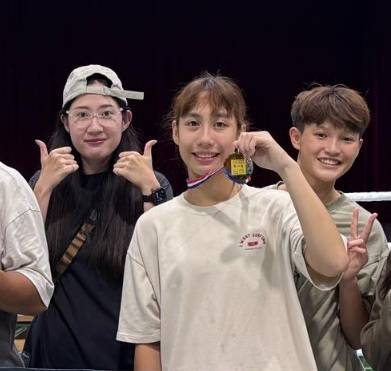
Following the match, Lin declined to address questions about his ongoing gender-eligibility controversy, stating only that he was “still adjusting to the 60-kilogram class.” Lin’s coach, Tseng Tzu-Chiang, said the match was “routine” and would not comment on regulatory matters.
Lin is on track to win gold at the National Games in the final this week, which would make it his 7th consecutive win in women’s boxing at the National Games. The event does not have any known sex testing protocols in place.
Despite enjoying ample domestic support during the Olympics, Taiwanese netizens are torn over Lin’s continued participation in women’s boxing. On one Taiwanese forum discussing the results of the National Games, the response was almost uniformly negative as many netizens encouraged Lin to step away from athletics.
“[Lin] got into the Olympics and ad deals by gaming the system; [he] should just retire. Retire and save face,” one user wrote.
“If you’re not allowed to play internationally, why do you have to participate in the domestic competitions?” another asked, referencing the fact that Lin has been unable to participate in any international events due to a recent sex-testing requirement implemented by World Boxing to protect female athletes. A second user echoed the comment, writing: “Too scared to undergo testing for international competition, but in domestic matches [he] hits hard.”
“Human rights have made great progress, and there is still money in beating up women,” another user said.
The Independent Council on Women’s Sports was notified of Lin’s performance at the National Games, and condemned his continued participation in female athletics.
“Allowing a male boxer like Lin Yu-Ting to compete in the women’s division is a blatant violation of fairness and, most importantly, a grave safety risk to female opponents,” said spokeswoman Marshi Smith. “Eligibility policies must clearly define that the women’s category is reserved for female athletes only. Rules mean nothing without enforcement. You wouldn’t verify a weight class without a scale, and you can’t claim to have a women’s division without verifying sex. In a boxing ring, this isn’t just an unfair competitive advantage, it is a potentially deadly one. World Boxing got it right with its newly implemented sex screening protocols, and now national federations must follow its example.”
In 2024, Reduxx broke the news that Lin was one of two boxers participating in women’s boxing who had previously been disqualified from the Women’s World Boxing Championships after multiple tests demonstrated they were not female. At the time of the disqualification, Umar Kremlev, president of the International Boxing Association (IBA), stated that medical tests had proven the athletes “had XY chromosomes and were thus excluded from the sports events.”
Kremlev said that IBA executives had met towards the championship’s grand finale to discuss “fairness among athletes and professionalism,” after concerns were raised about the biological sex of some participants. He added that after “a series of DNA-tests,” the IBA “uncovered athletes who were trying to fool their colleagues and pretend to be women.”
Despite being disqualified from the World Boxing Championship, Lin was permitted by the International Olympics Committee (IOC) to compete in the Paris Olympic Games in the women’s featherweight category. This was made possible by the fact that the IOC had ended sex testing for athletes in 1999, and allowed individual Olympic committees to set their own rules for eligibility.
Lin easily won the gold medal at the Olympics in a 5 – 0 sweep. His match against Turkish boxer Esra Yildiz Kahraman drew particular concern from critics after he delivered what appeared to be an illegal rabbit punch to the back of her head – a move that is banned on the basis for its potential to cause brain damage or death. As Lin struck the back of Kahraman’s head, the audience booed, and even the sports commentator noted with surprise that, “Lin got away with that.”
During the Olympics and due to the Reduxx report, the participation of both Lin and Algerian boxer Imane Khelif came under intense media scrutiny, as did the decision of the IBA to have previously disqualified Lin and Khelif from women’s events.
Facing a firestorm of questions, the IBA held a press conference in which officials repeatedly confirmed that both Lin and Khelif had failed multiple chromosomal tests. The officials also stated that they had been barred from releasing the results of those tests by the Taiwanese and Algerian Olympic Committees.
Yesterday, the International Boxing Association held a press conference addressing the concerns surrounding Algerian boxer Imane Khelif and Taiwanese boxer Lin Yu-Ting.
— REDUXX (@ReduxxMag) August 6, 2024
𝘙𝘦𝘥𝘶𝘹𝘹 has created a supercut of relevant sections.
TIMESTAMPS:
𝟬𝟬:𝟮𝟯 – Both boxers had the… pic.twitter.com/LnB1Tczk3f
During the press conference, clarification was also given by Dr. Ioannis Filippatos, the former Chair of IBA Medical Committee, who similarly stated that the blood and medical tests found the boxers were male. It is reported that during the conference, BBC journalists walked out in protest of this statement.
Neither Lin nor Khelif are believed to be transgender, and instead were suspected of being impacted by a Disorder of Sexual Development (DSD) – a category of medical conditions which often cause a person’s reproductive organs and genitals to be “mismatched” at birth. Male infants born with a DSD are often accidentally recorded as female due to what appears to be an absence of external genitalia.
The speculation that Lin and Khelif may have a DSD was accidentally confirmed by the International Olympic Committee President Thomas Bach during the Paris games.
At one point, Bach was forced to issue a correction of an erroneous statement he made in which he said that the cases of Lin and Khelif were “not a DSD case.” A hasty correction swapped the word “DSD” with “transgender.”
The IOC has now all but confirmed that Khelif is a male with a DSD.https://t.co/Lbel8heJ4L pic.twitter.com/3RvAU73ufQ
— Genevieve Gluck (@WomenReadWomen) August 3, 2024
Following the Paris Olympics, Lin quietly slipped out of the stoplight while Khelif took center stage in repeat controversies. Some of Khelif’s medical records were leaked, proving he had an XY karyotype.
Despite this, Khelif boasted of his wins while threatening to sue those who he claimed “falsely” labeled him as male. Those suits appear to have been abandoned, and Khelif has stepped back from World Boxing-sanctioned events. The timing of his decision coincided with an August announcement from World Boxing stating that they would be implementing a policy requiring sex testing for all women’s competitions. Khelif has since launched an appeal at the Court of Arbitration for Sport challenging the WB’s decision to implement a sex testing requirement.
Following the WB policy update, Lin’s coach stated that the boxer was undeterred and had every intention of participating in the September World Boxing Championships. Lin had also reportedly agreed to submit to a sex test. However, Lin was conspicuously absent from the Championships and the Taiwanese boxing authority refused to respond to questions from press as to why there was an abrupt change of plans.
Since the Paris Olympics, Lin has refused or failed to participate in every boxing competition where an unambiguous sex test was required.
Reduxx is your source of pro-woman, pro-child safeguarding news and commentary. We’re 100% independent! Support our mission by making a one-time donation.
