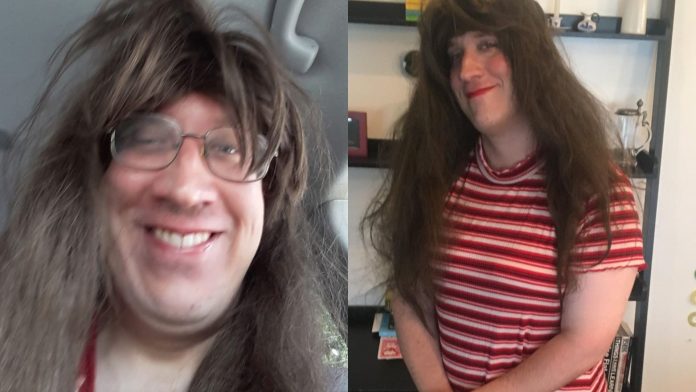
A police officer in DeKalb County, Georgia, is under investigation after asking a trans-identified male to leave the women’s restroom at a local library.
The incident occurred on October 20 at the Tucker-Reid H. Cofer Library in Tucker, Georgia. On that day, Sasha Swinson, a man who identifies as a woman, was using the library’s female restroom. After exiting, a male police officer approached him and asked him to use the men’s facilities instead.
Speaking to local news, Swinson claims the officer then added: “You’re not a woman. That’s obvious,” speaking loudly enough for others nearby to hear. When Swinson asked whether he was speaking on behalf of the library, he says the officer replied: “This is a police matter. It’s a safety issue. There are women, little girls in there,” before threatening to arrest Swinson.
After leaving the library, Swinson contacted his pastor, Matt O’Rear of St. Luke Lutheran Church, who encouraged him to report the incident to the library. A library employee apologized to Swinson in writing and forwarded the complaint to leadership, who then relayed it to the police department.
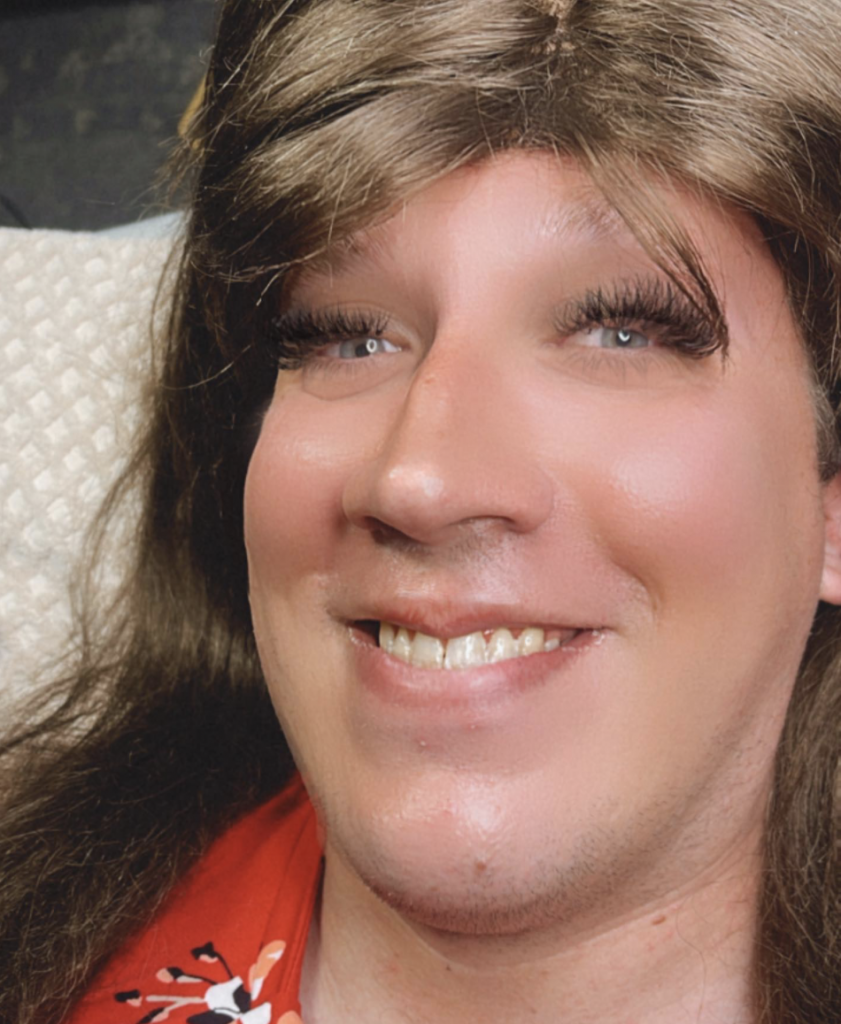
Soon afterward, the DeKalb County Police Department’s Internal Affairs Unit contacted Swinson, confirming that an investigation had been opened into the officer who had asked him to use the male bathroom. A department spokesperson said the agency could not share additional details while the investigation is ongoing.
Georgia does not have a law restricting males from accessing female spaces on the basis of self-identification, and both DeKalb County and the city of Tucker have nondiscrimination ordinances that explicitly protect gender identity. Georgia Equality, an LGBTQ+ advocacy organization, called the encounter a violation of those protections, and appears to be using the incident to push for the DeKalb County Police Department to employ an “LGBTQ+ Liaison.”
Outside of K-12 schools, Georgia remains one of only a handful of states without a public-accommodations statute, meaning there is no statewide ban restricting trans-identified males from self-identifying into women’s restrooms. Some cities, including Atlanta and Tucker, have local nondiscrimination ordinances protecting gender identity in public spaces.
Reduxx has located a Pintrest profile belonging to Swinson, who was born William L. Swinson, that reveals his interest in cross-dressing fetishism, and includes concerning themes such as an interest in young boys wearing female attire.
In a Pintrest board Swinson has titled as “bodysuit lingerie,” multiple photos of what appear to be male minors in feminine clothing are saved. One photo, showing a young boy wearing a pink gown and brown wig, is captioned by Swinson as “mom’s trailer park trash little gurl and so proud of it.”
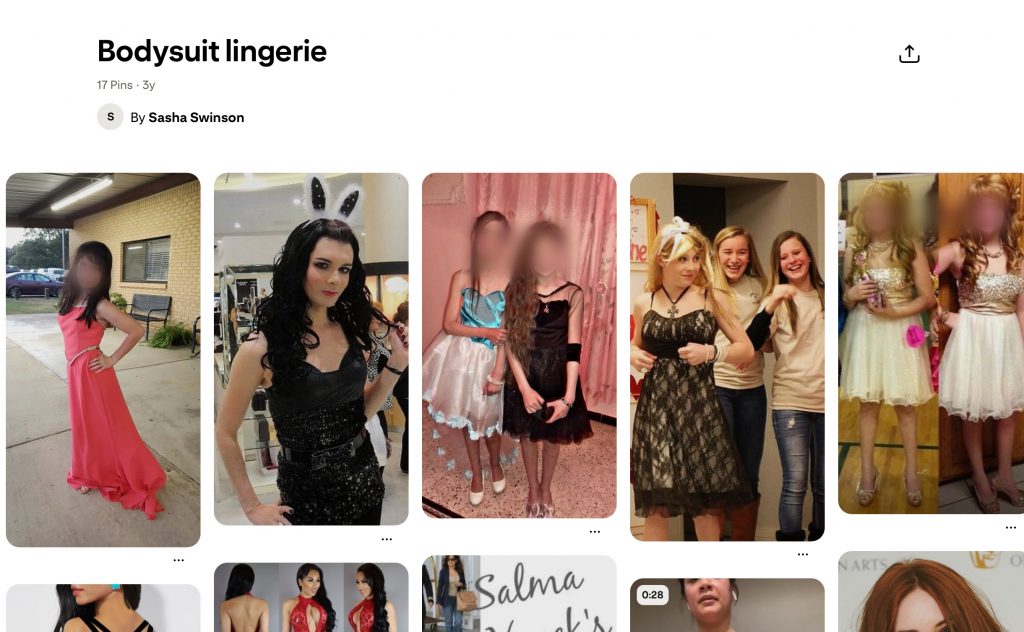
On another board created by Swinson, a heavily edited photo of what appears to be a child in suggestive feminine attire is pinned. The photo has a source link associated with it which takes users to a saved Yahoo image compilation of young men and boys in dresses and beauty pageant attire. One of the photos in the anonymously-curated collection, which features two very young boys wearing dresses as part of what seems to be an innocent costume event, is captioned: “The hot boy on the right, just looks soooo delicious!”
While Swinson has not yet made clear if he plans to take any action against the DeKalb County Police beyond awaiting the results of their internal investigation, he may still be able to pursue legal action under Title II of the Civil Rights Act, which protects individuals from discrimination by government agencies or employees. If Swinson argues he was discriminated against because he was transgender, it can still fall under the category of “sex-based discrimination” even with current ongoing policy debates.
Even as the Trump administration moves to narrow the federal government’s interpretation of “sex” in civil-rights laws to protect women’s access to single-sex spaces, courts and local governments continue to affirm that discrimination against transgender people is a form of sex discrimination — a protection grounded in the U.S. Supreme Court’s 2020 ruling in Bostock v. Clayton County.
In Bostock, which originated in Georgia, the Supreme Court held that firing or mistreating someone for being transgender or gay inherently constitutes discrimination “because of sex.” Locally, DeKalb County unanimously moved to strengthen those protections by passing a nondiscrimination ordinance that explicitly includes gender identity and expression. The ordinance bans bias in public accommodations and county government services, ensuring residents can still file complaints even if federal policy fluctuates.
Reduxx is your source of pro-woman, pro-child safeguarding news and commentary. We’re 100% independent! Support our mission by making a one-time donation.
