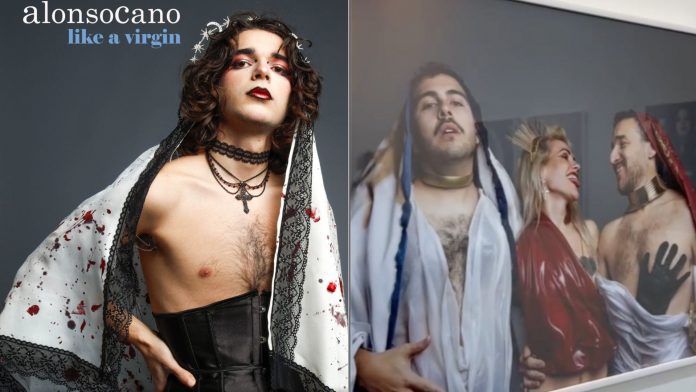
The Museum of Guadalajara in Spain is under fire for an exhibition that “reimagines” the Virgin Mary using trans-identified male models and fetish-inspired imagery, drawing condemnation from women’s rights advocates and Catholic groups alike.
Opened to the public on May 7 and running until June 21, Alonso Cano: Like a Virgin claims to be an attempt to develop a “contemporary ideological discourse on sexuality, gender, and the ‘re-appropriation’ of the female body in art.”
According to the official description issued by the Ministry of Education, Culture and Sports of Castilla-La Mancha, the exhibit is a collaborative project by students at the Elena de la Cruz School of Art and was inspired by one of the Museum’s most important pieces: Alonso Cano’s 17th century painting La Virgen de la Leche.
The classic painting depicts the Virgin Mary breastfeeding the infant Christ, and is one of the most significant works in the Virgo Lactans (“Nursing Virgin”) tradition, an iconography that is said to emphasize both Mary’s motherhood and Christ’s humanity. In medieval and Renaissance art, depictions of the Virgin Mary breastfeeding were relatively common, but after the Counter-Reformation, many church authorities became uncomfortable with depictions of the Virgin Mary exposing her breast, and the motif gradually fell out of favor in Spain.
Rather than presenting the painting solely as a historical masterpiece, the exhibition claims to use it as a starting point for a “conversation” about the representation and censorship of womanhood in religious imagery, and changing cultural attitudes from the early modern period to the present day. The exhibition also draws connections between Baroque art and modern fashion and pop culture, invoking figures such as Madonna and Alexander McQueen.
But the art project is drawing outrage from women’s rights groups and Catholic organizations alike as both respond to the use of fetishism and transgenderism to represent both the female body and the “reimagined” image of the Virgin Mary.
Cómo decir sin decirlo que cualquier tema exclusivo de las mujeres es una birria si no incluye hombres.
— Contra El Borrado de las Mujeres (@ContraBorrado) May 20, 2026
«Una mirada al pecho femenino desde el arte». Un proyecto que «parte del análisis de la iconografía de la Virgo Lactans para ensalzar la figura femenina frente a la censura».… pic.twitter.com/eFtYFxI5Jp
Photos from within the exhibit posted by InfoVaticana show portraits of multiple trans-identified male models wearing sexualized women’s lingerie and exposing their “breasts.” Other portraits of the men show them wearing robes, halos, and crowns directly inspired by various artistic depictions of the Virgin Mary.
The model’s images are also shown throughout the exhibit individually, peppered between different statues, icons, and paintings of the Virgin Mary.
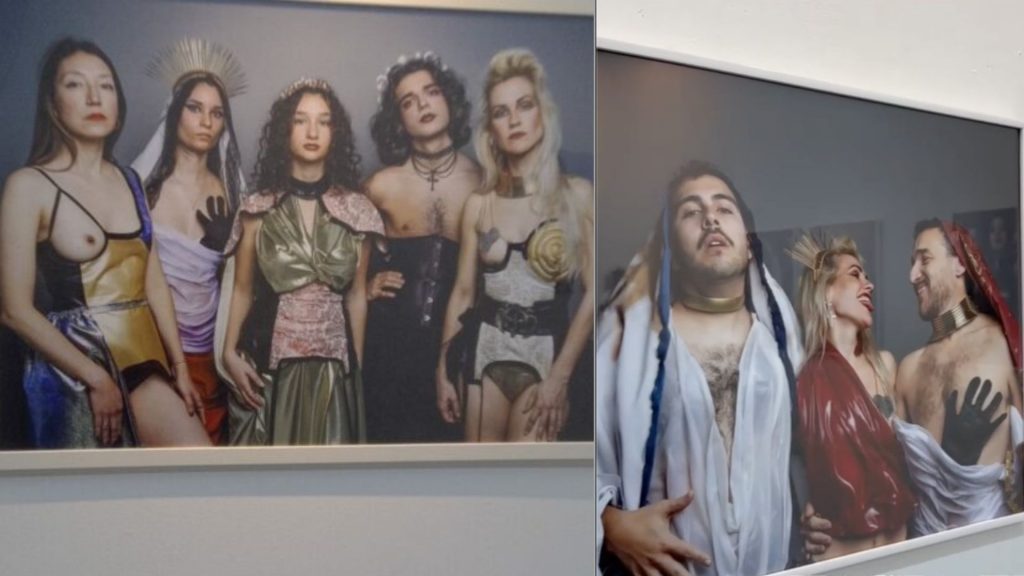
Due to the exhibit’s use of heavily Catholic iconography, Catholic groups in Spain are attempting to push back against what they have declared as an insult to their faith.
The Christian Lawyers Association of Spain announced they are taking legal action against those responsible for the exhibit, calling it a blasphemous use of the “spiritual and sacred meaning of Marian iconography.” The group has submitted a complaint with the Court of First Instance of Guadalajara as part of an administrative appeal filed against the Ministry of Education, Culture and Sports of Castilla-La Mancha for having authorized the exhibition.
The association is also seeking to have criminal charges filed against the organizers under Article 525 of the Spanish Penal Code, which stipulates that individuals who publicly offend, deride, or vilify the dogmas, beliefs, rituals, or feelings of religious communities can be punished, primarily with financial fines.
But the Ministry’s regional spokesperson, Ángel Fernández, has defended the exhibit as being a demonstration of the artistic and creative freedom for the students of the Elena de la Cruz School of Art.
“We are educating young people in a democracy, under a set of principles,” Fernández stated, arguing that one of the fundamental principles of democracy is “freedom of expression and artistic, literary, and scientific freedom, and the idea that we should be free individuals.”
This is not the first time trans-identified males have been used to represent women and motherhood in art.
In 2021, online zine Feminist featured the work of Argentina-based photographer Kenny Lemes. While five pieces of Lemes’ art were posted in total, one in particular featured a seemingly naked male cradling a baby, which was suckling at a rubber nipple that had been affixed to the male model’s own.
Lemes told the outlet that the purpose of the photo was to “[expand] the gaze on bodies,” claiming it was a “very important political act one discovers the potency of existing, proudly, on the edges of hetero-patriarchal thinking.”
A disturbing photo of a nude male "breastfeeding" a baby while wearing rubber nipples is going viral on social media.
— REDUXX (@reduxx) October 16, 2022
The photo can be traced back to artist Kenny Lemes, who described it as "binary shifting" and "challenging hetero-patriarchal thinking."https://t.co/Jqx8m8YjLt
The zine was later forced to delete the photo due to overwhelming backlash, even amongst liberal feminist readers, who implored Lemes not to use real babies in highly controversial art.
In 2023, the Gender Museum (KØN) in Aarhus, Denmark, drew similar backlash after erecting a statue of a naked trans-identified male breastfeeding a baby. The nude figure, constructed in 2021 as a self-portrait by Aske Kreilgaard, is depicted with exposed male genitals and breasts to which he is holding a feeding baby.
Reduxx is your source of pro-woman, pro-child safeguarding news and commentary. We’re 100% independent! Support our mission by making a donation.
